TechnoLOGY. Powered by Blogger.

Translate

Total Page Views

CATEGORY

Featured 1

Curabitur et lectus vitae purus tincidunt laoreet sit amet ac ipsum. Proin tincidunt mattis nisi a scelerisque. Aliquam placerat dapibus eros non ullamcorper. Integer interdum ullamcorper venenatis. Pellentesque habitant morbi tristique senectus et netus et malesuada fames ac turpis egestas.

Featured 2

Curabitur et lectus vitae purus tincidunt laoreet sit amet ac ipsum. Proin tincidunt mattis nisi a scelerisque. Aliquam placerat dapibus eros non ullamcorper. Integer interdum ullamcorper venenatis. Pellentesque habitant morbi tristique senectus et netus et malesuada fames ac turpis egestas.

Featured 3

Curabitur et lectus vitae purus tincidunt laoreet sit amet ac ipsum. Proin tincidunt mattis nisi a scelerisque. Aliquam placerat dapibus eros non ullamcorper. Integer interdum ullamcorper venenatis. Pellentesque habitant morbi tristique senectus et netus et malesuada fames ac turpis egestas.

Featured 4

Curabitur et lectus vitae purus tincidunt laoreet sit amet ac ipsum. Proin tincidunt mattis nisi a scelerisque. Aliquam placerat dapibus eros non ullamcorper. Integer interdum ullamcorper venenatis. Pellentesque habitant morbi tristique senectus et netus et malesuada fames ac turpis egestas.

Featured 5

Curabitur et lectus vitae purus tincidunt laoreet sit amet ac ipsum. Proin tincidunt mattis nisi a scelerisque. Aliquam placerat dapibus eros non ullamcorper. Integer interdum ullamcorper venenatis. Pellentesque habitant morbi tristique senectus et netus et malesuada fames ac turpis egestas.

Showing posts with label 2013. Show all posts

Friday, July 6, 2012

2013 Toyota RAV4 EV

2013 Toyota RAV4 EV

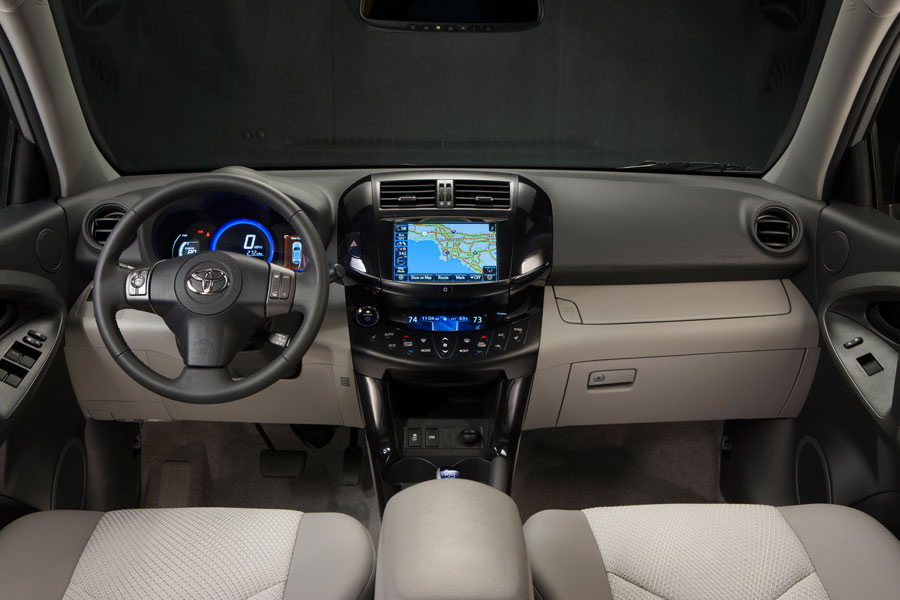
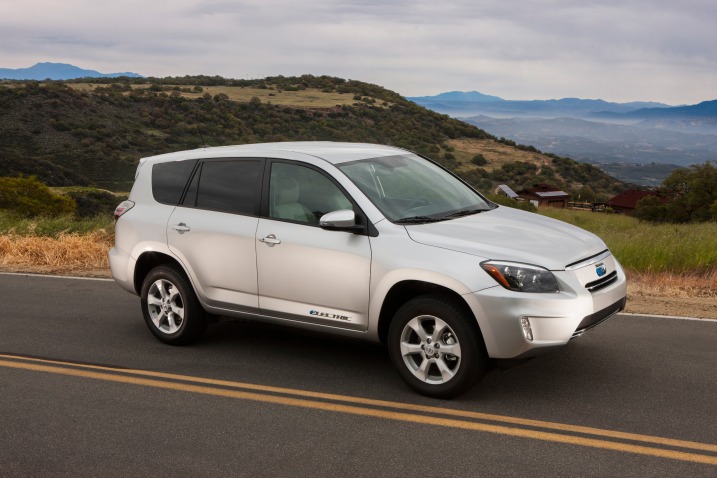
The second generation 2013 Toyota RAV4 EV was first unveiled at the Los Angeles Auto Show back in 2010. The 2013 Toyota RAV4 EV is currently the only all electric SUV on the market. The RAV4 is a result of a collaboration that started in May, 2010 between Tesla Motors and Toyota. One of the Goals Toyota had when building the RAV4 EV was not compromising on versatility, comfort or performance. The United States market launch will be late summer of 2012 at a starting price of $49,800. Sales will begin initially in California and production will be limited to 2,600 units during the first three years.

Performance

The 2013 Toyota RAV4 EV is powered by an all-electric drive train sourced from Tesla that produces a maximum output of 154 horsepower. This SUV can accelerate from zero to 60 mph in 7.0 seconds and has a top speed of 100 mph in sport mode. Normal mode takes 8.6 seconds to reach zero to 60 mph and has a top speed of 85 mph. The RAV4 EV has a range rating of around 100 miles and takes about six hours to fully charge on a 240V/40A charger.

2013 Toyota RAV4 EV

2013 Toyota RAV4 EV

2013 Toyota RAV4 EV

2013 Toyota RAV4 EV

2013 Toyota RAV4 EV

View the original article here

Monday, July 2, 2012

2013 Toyota Yaris Diesel

2013 Toyota Yaris Diesel


The Toyota Yaris has proved to be a affordable and economical entry level compact car. For those of us that want the ultimate in frugality, the 1.4L D-4D diesel engine is the best choice. However, here in North America the Toyota Yaris has not become available but with increased fuel prices maybe we will see one in the future. The North American Yaris is available as a three and five door hatch-back and starting at a MSRP of $14,115 for the three door and $16,100 for the five door model. Fuel efficiency of the Yaris is at 30 city and 38 highway. The diesel model was tested getting 70.49 mpg in the ALD Fleet world MPG marathon and was the overall winner. The Toyota Yaris is sold as the Vitz in Japan.

The Yaris has been a huge success for Toyota with global sales at 3.5 million in 70 countries. The new Yaris has made a lot of improvements over the out going model to make sure the Yaris stays on top of the competition. The Yaris has the same width as the out going model but is 100mm longer and height has been reduced by 20mm. The styling seems more aggressive that the previous Yaris and the sedan has been dropped in favor of a five door hatch back.

Performance

The diesel version of the Toyota Yaris is powered by a compact 1.4L inline four-cylinder turbocharged and intercooled diesel (1ND-TV) engine. This engine was designed around low emissions, low fuel consumption, reduction of mass and reduction of noise. This engine produces 90 horsepower at 3,800 rpm and 140 lb-ft between 1800-3000 rpm. This engine is used in the Toyota Auris, Corolla, iQ, Ractis, Verso-S, Urban Cruiser, Yaris and the Mini Cooper D. The Diesel Yaris can accelerate from 0 to 60 in 10.8 seconds when equipped with the six-speed manual transmission.

2013 Toyota Yaris Diesel

2013 Toyota Yaris Diesel

2013 Toyota Yaris Diesel

View the original article here

2013 Volkswagen CC

www.techolook.com


Volkswagen first debuted the CC at the 2008 North American International Auto Show in Detroit. This car has been marketed as a more luxurious offering than the standard Passat. It is also considered a four door coupe so essentially the CC is to the Passat as the Mercedes-Benz CLS is to the E-Class. The 2013 Volkswagen CC has impressive technology and safety features such as, lane assist, fatigue detection, dynamic light assist, climate seat with integrated massage function, LED tail lights, LED license plate illumination and bi-xenon headlights. The LED running lights look inspired by the Audi designs.

Klaus Bischoff, Head of Design for Volkswagen, refreshed the front and rear body sections of the 2013 CC, giving it a more elegant image.

Performance

The Volkswagen CC is available with a total of six engines, four gasoline and two diesels. In the United States the car will launch with 200 horsepower 2.0L TSI (21 city/33 highway mpg) and the 280 horsepower 3.6L VR6 gasoline engines. In the chart below you will see the other engines that are available in Europe. It would be nice if Volkswagen decided to bring one of the 2.0L TDI diesel engines to the United States market. The transmissions available are the six-speed manual or the six-speed DSG automatic.

www.techolook.com

www.techolook.com

www.techolook.com

www.techolook.com

www.techolook.com

Sunday, July 1, 2012

New Audi SQ5 TDI with 308HP

Audi SQ5 TDI with 308HP


It is the right time for Audi to present its first ever S model that is empowered by the 308 horses. Yes, the new SQ5 TDI shows that the company has already accept the challenge from BMW to present sporty models with diesel powered.

The new SQ5 TDI is developed based on the Q5 model series and is empowered by a 3.0-liter twin-turbocharged V6 diesel. The diesel is able to deliver a generous 308 horses or around 313 PS of power and 650 Nm or equal to 4679 lb- ft of peak torque that is reached between 1,450 and 2,800 rpm.

It is claimed that the new Audi SQ5 TDI can sprint from standstill to a hundred kilos per hour or 62 mph in just 5.1 seconds sprint time, while reaching a top speed of 250 km/h or 155 mph. the average fuel economy is returned of 7.2 lt/100 km (32.7 US mpg or 39.2 UK mpg).

The buyers can opt for a choice of eight speed tiptronic transmission or the Quattro permanent all wheel drive system that is completed with torque vectoring working to distribute the power.

The body of the SQ5 is now lowered by 30 mm or 1.18 inch over the previous model, thanks to the returned electromechanical power steering and a tuned sports suspension.

The new car brings some goodies into the cabing such as power-adjustable sport seats in Pearl Nappa leather/Alcantara, brushed aluminum inlays, gray instrument dials with white needles, and S-spec steering wheel, gear lever knob and decorative trim.

Additionally, the company has also fitted its new sporty car with a new styling kit that covers a platinum gray single-frame grille with an aluminum-look trim for the bars, the roof spoiler, window surrounds, mirrors and modified bumpers.

The SQ5 TDI that rides on 20-inch alloy wheels shod with 255/45 tires will have arrived in the Audi’s European dealerships by the first quarter of next year. For you who are interested just be ready with at least €58,500 or around US$73,600. Unfortunately, it is still not clear yet, whether the company will bring the model to the States or not.

Audi SQ5 TDI with 308HP

Audi SQ5 TDI with 308HP

Audi SQ5 TDI with 308HP

Audi SQ5 TDI with 308HP

View the original article here

Saturday, June 30, 2012

2013 Audi A6 3.0T

2013 Audi A6 3.0T

When it comes to throwing down $50k on a car you probably want to know that your car is fully capable of delivering on every single aspect. In this article we look at the 2013 Audi A6 3.0T and see if it’s worth the money. The Audi A6 has always been a sharp looking vehicle that was bread to compete against rivals such as the BMW 5-Series and the Mercedes-Benz E-Class. Here is my take on the Audi and that is you get a luxurious vehicle that has an underpowered yet refined engine under its bonnet. Audi sits behind Lexus, Mercedes-Benz and BMW in quality and has a hard time competing with other vehicles in this area but if you are looking at one of these cars then you are more than likely looking at a lease option so therefore don’t worry about it. If you are looking at actual ownership of the Audi A6 I would hope that you plan to keep it forever and ever as the depreciation will be severe and it could be a hard vehicle to get sold in the future. The reason being is many individuals get scared when you mention forced induction and 100k miles on the OD. Usually this is about the time when bad things can happen but with this being a supercharger and not a turbo can help out plus the engine is running at a low compression ratio of 10.3:1.

A down side to the Audi A6 is that the 3.0L Supercharged V6 is only producing 310hp but it is pumping 325 lb-ft or torque which is good for the Audi AWD Quattro system. But you are now seeing normally aspirated Chevrolet V6’s producing 323hp. So I think it’s time Audi step up the horsepower on this car and give the customers a more spirited drive. Of course I complain about the horsepower but this car is moving from 0-60 in just 5.3 seconds which is sport car fast and says a lot for a 4045lb car. The vehicle is connected to an 8-speed auto and gets you 28 mpg on the highway which is not bad for this big and heavy of a car.

This looks to be a good car for someone that is looking to stray just a little from the normal but I personally would only lease this vehicle instead of going for a full-out purchase. If you want an AWD sedan that is worthy of complete ownership then get a Limited Subaru Legacy. If you want to impress the neighbors and co-workers then get this $50,000+ Audi A6.

2013 Audi A6 3.0T

2013 Audi A6 3.0T

2013 Audi A6 3.0T

2013 Audi A6 3.0T

2013 Audi A6 3.0T

2013 Audi A6 3.0T

View the original article here

Monday, June 25, 2012

2013 Hyundai Santa Fe and Santa Fe Sport

2013 Hyundai Santa

AUTO SHOWS: Rumors about the return of the seven-passenger Hyundai Santa Fe have been floating around for quite a while. While we expected the 2013 Santa Fe midsize crossover to grow in just about every dimension to better fit a third row, Hyundai is also debuting the 2013 Santa Fe Sport, a smaller five-passenger model with an optional turbocharged four-cylinder engine.

The two Santa Fes don't share a single powerplant. The shorter Santa Fe Sport goes for an all four-cylinder lineup, starting with a 2.4-liter 190 hp I-4 making an estimated 181 lb-ft of torque. The optional powerplant is Hyundai's now familiar 2.0-liter turbocharged I-4, which produces 264 hp and 269 lb-ft of torque under the hood of the Santa Fe Sport 2.0T. The 8.5-inch longer Santa Fe gets a slightly more potent engine -- the 3.3-liter 290-hp V-6 ripped straight from the new Azera. All three engines are hooked up to a six-speed automatic transmission. Front-wheel drive is standard, while all-wheel drive with torque vectoring is available.

Fuel economy was a major focus with the 2013 Santa Fe and Santa Fe Sport. Though larger than before, thanks to the increased use of lightweight high-tensile steel, curb weight has dropped but fuel economy, for the most part, has improved. Hyundai expects front-drive Santa Fe Sports equipped with the 2.4-liter I-4 to achieve 23/33 mpg city/highway, and front-drive turbo models to get 23/31 mpg. Hyundai expects the V-6-powered Santa Fe to score 19/26 mpg in EPA testing. For comparison, the outgoing Santa Fe scored 20/28 mpg with the I-4, and 20/26 mpg with the V-6. All 2013 Santa Fes come standard with Hyundai's Active ECO system.

Hyundai incorporated a few new driver-oriented technologies into the new Santa Fe and Santa Fe Sport, including its new all-wheel-drive system with Torque Vectoring Cornering Control, or TVCC for short. Hyundai's TVCC can distribute torque as needed to any single wheel at any time, allowing the system to reduce unwanted understeer or oversteer. Hyundai is seeking to improve steering feel with its new Driver Selectable Steering Mode (DSSM) system on the Santa Fe and Santa Fe Sport. DSSM includes three operating modes - Comfort, Normal, and Sport - that can lower or raise steering effort depending on the mode. DSSM adjusts not only the assistance level, but also the on-center and in-curve build-up feel, which Hyundai says will offer "a very natural progressive feel." We'll have to wait and see on that one.

As for styling, the Santa Fe and Santa Fe Sport wear Hyundai's new "Storm Edge" design language. Up front, both Santa Fe models feature Hyundai's large trapezoidal chrome grille with three bars on the Santa Fe Sport and four bars on the Santa Fe. The headlights visually link the Santa Fe to the new Genesis Coupe and Veloster. The Santa Fe and Santa Fe Sport's lower front fascia features a faux aluminum skid plate flanked by two foglights, which have LED daytime running lights.

The Santa Fe Sport and longer Santa Fe stylistically diverge in the profile and rear views. The window line arches up aggressively, giving the Santa Fe Sport a small window behind the rear passengers. The Santa Fe has a less aggressive beltline and a larger window behind the second row.

Out back the larger Santa Fe has dual exhaust and large taillights. The Santa Fe Sport gets a more aggressive taillight design, and a twin-tipped exhaust that exits on the right side of the car. The base Santa Fe Sport rides on 17-inch wheels, while Santa Fe Sport 2.0Ts gets 19-inch wheels. The Santa Fe rides on either 18- or 19-inch wheels.

The interior of the two Santa Fes have a flowing center stack that's typical of Hyundai. Both models offer Hyundai's third-generation navigation system on a multifunction eight-inch touch-screen display. Hyundai's Blue Link service (think OnStar) is standard on all Santa Fe models, while the long-wheelbase Santa Fe gets blind spot detection. Other available features include a panoramic sunroof, push-button start with keyless entry, and heated seats front and rear.

Some of the more functional interior amenities include a second row that folds flat and splits 40:20:40, and is available with the ability to slide fore and aft. The three-row Santa Fe boosts 1.9 inches more second row legroom than the Santa Fe Sport. The Santa Fe's third row is split 50:50, can fold flat into the floor, and offers 31.5 inches of legroom.

The short-wheelbase 2013 Hyundai Santa Fe Sport will go on sale in July. Those looking for seven-passenger utility will have to wait until January 2013 to get their hands on the larger Santa Fe, which replaces the oft-forgotten Veracruz in Hyundai's lineup. Pricing hasn't yet been announced, but expect the 2013 Santa Fe Sport to start around $25,000, and the 2013 Santa Fe to carry a base price closer to $30,000.

2013 Hyundai Santa

2013 Hyundai Santa

2013 Hyundai Santa

2013 Hyundai Santa

2013 Hyundai Santa

2013 Hyundai Santa

2013 Hyundai Santa

2013 Hyundai Santa Fe Sport and Santa Fe
 
BASE PRICE: $25,000-$28,500 (est)

VEHICLE LAYOUT: Front-engine, FWD/AWD, 5-7 pass, 4-door SUV

ENGINES: 2.4L/190-hp/181-lb-ft DOHC 16-valve I-4; 2.0L/264-hp/269-lb-ft turbocharged DOHC 16-valve I-4; 3.3L/290-hp/255-lb-ft DOHC 24-valve V-6*

TRANSMISSION: 6-speed automatic

CURB WEIGHT: 3450-4000 lb (mfr)

WHEELBASE: 106.3 in (Sport); 110.2 in. (LWB)

LENGTH X WIDTH X HEIGHT: 184.6 x 74.0 x 66.1 in (Sport); 193.1 x 74.2 x 66.5 in

0-60 MPH: 7.0-9.5 sec (est)

EPA CITY/HWY FUEL ECON: 0.73-0.90 lb/mile

ENERGY CONSUMPTION, CITY/HWY: 0.73-0.90 lb/mile

CO2 EMISSIONS: 147-177/102-130 kW-hrs/100 miles

ON SALE IN U.S.: 147-177/102-130 kW-hrs/100 miles

July 2012 (Sport); January 2013 (LWB) 

View the original article here

Sunday, June 24, 2012

2013 Subaru BRZ

2013 Subaru BRZ

We will admit that we never thought of Subaru as a sports-car maker. Yes, Subaru has made sporty, high-performance cars -- the WRX and STI, of course. But they were not sports car. Neither was the SVX, although it was cool in its own way, and the XT coupe before it, which was sort-of cool in a very weird way, was no sports car, either.

The Subaru BRZ, however, is very much a sports car, and it’s the kind we don’t see much anymore: light, lithe, fun, and affordable. That’s an unusual formula in this age of overpriced, overpowered image machines, but it’s not as strange as the circumstances that created it to begin with.

As you no doubt know, the BRZ was a joint effort between Toyota and Subaru, with both companies sharing the resulting sports car. The Toyota version will be sold as the Scion FR-S in the U.S. market, and as a Toyota elsewhere.

What set the stage for this joint product development was Toyota’s purchase of a small stake in Fuji Heavy Industries, Subaru’s parent company, back in 2005 (later increased in 2008). With Toyota guiding the product planning, it was decided that the two companies would collaborate to build a rear-wheel-drive sports car, the hope evidently being that having both brands selling it would increase sales for the inherently low-volume product. Toyota was responsible for the design, which is why the car looks more like a Toyota than a Subaru. The idea from the get-go was that the two firms would build a single sports car -- not two cars -- so visually differentiating them was not a priority. The very minor differences we do see, chiefly in the front end, were done late in the car’s development. In the interest of keeping the car’s cost down, precious few development dollars (well, yen) were spent to create different looks for Toyota (Scion in the USA) and Subaru. Subaru did the engineering on the car, although the company had to meet Toyota engineering targets as well as their own. Subaru also will assemble the coupes.

At a time when we so often hear about raised rooflines, higher beltlines, and the “command seating position,” it is unusual for an automaker to talk about the virtues of getting low. And yet that was an overriding factor driving the development of the BRZ. Going with a Subaru horizontally opposed four-cylinder, rather than one of Toyota’s many conventional in-line fours, got things off to a low start, as the flat four meant a much more squat engine, which was the first step to achieving a low center of gravity. This is an all-new boxer engine, and features such as a slimmer oil pan and uniquely designed intake and exhaust help make it more than 3 inches shorter than Subaru’s existing boxer four. That allowed a lower hood, a feature that is itself unusual, what with Europe’s pedestrian protection regulations necessitating additional space between the hood and the top of the engine. (Subaru’s workaround is a hood that is designed to absorb energy.) A low hood necessitated a forward-canted radiator and created the need for shorter front strut towers, which were redesigned accordingly. Even so, the vaguely Corvette-like fender swells are there to clear them and allow the rest of the front bodywork to sit lower. Speaking of sitting lower, in order for the driver to sit low in the car -- and afford decent headroom under the low (50.6-inch) roofline -- Subaru had to design special frame rails for the front seats.

You do indeed sit low in this car -- the H-point is nearly 5 inches lower than an Impreza’s -- in seats that are firm, with prominent side bolsters. The dash, and the whole interior, is blessedly free of gimmicks -- save perhaps the keyless pushbutton ignition in the higher-trim model. Switchgear couldn’t be simpler. The blunt instrument panel is faced with aluminum trim, and that’s the biggest concession to style, although cheap materials have largely been avoided. A touch-screen navigation system will be standard in U.S. cars but it was not in the Euro-spec version we drove. The driving position is excellent, with fairly upright glass and modest pillars that afford a good view. The longish hood is framed by those two fender swells. The gauge cluster borrows from Porsche -- a round, central tachometer with a digital speedometer dominates, flanked on the left by the analog speedometer and on the right by gauges for fuel level and coolant temperature. The small, well-shaped steering wheel features red stitching. Headroom is surprisingly plentiful -- the roof incorporates a “double bubble” design -- so wearing a helmet on track day should be no problem. There is no sunroof, however. The car is a 2+2, but the rear seats are strictly theoretical. Headroom in back is extremely limited, and a taller-than-average driver is going to have his seat so far back that rear-seat riders will be hard-pressed to wedge a foot between the front seatback and their seat cushion. The rear seatback does fold down, however, exposing a wide pass-through to the 6.9-cubic-foot trunk.

2013 Subaru BRZ

2013 Subaru BRZ

2013 Subaru BRZ

2013 Subaru BRZ

2013 Subaru BRZ

2013 Subaru BRZ

Base price: $25,000 (estimated)

Fuel economy:
(city/hwy)
22/30 mpg (manual)
25/34 mpg (automatic)

Engine:
2.0L DOHC H-4
Horsepower: 200 hp @ 7000 rpm
Torque: 151 lb-ft @ 6400 rpm

Drive:
Rear-wheel

Transmissions:
6-speed manual, 6-speed automatic
Curb weight: 2762-2822 lb
Wheels/tires:
17 x 7-inch wheels
215/45 R17 tires

View the original article here
Friday, June 22, 2012

2013 Mercedes-Benz SL63 AMG

2013 Mercedes-Benz SL63 AMG

If the eyes are the windows to the soul, then the dazed peepers on the 2013 Mercedes-Benz SL63 AMG, with their heavy, cockeyed lids, would reveal the newest iteration of the hot-rod SL to be an incorrigible drunk with a fondness for the snooze button.

But like many things your granddad told you, it’s poppycock. The SL63 is actually fully alert and has its metaphorical shit together. In fact, it was up hours before you—fresh as a daisy—closing deals like the master of the universe it is.

So ignore the eyes. They mean nothing at all. For soul, you’ll want to look at the great, stonking hunk of twin-turbocharged 5.5-liter V-8 that produces, in base-level form, 530 horsepower and great gobs of torque with no apparent effort. That’s 12 more horsepower than the naturally aspirated 6.2-liter V-8 made in the previous SL63. With so little difference in peak power, you might wonder why AMG bothered. Indeed, so good was the 6.2-liter that AMG engineers get wistful just talking about it, even in front of the meddling, judgmental press. Goodness, was it a lusty thing with perfectly linear power delivery, immediate throttle response, and an exhaust snarl that would cause wolverines in neighboring states to believe they’d heard the voice of their God.

But, while the 6.2-liter is making its last stand in the C63 and the SLS gullwing and roadster, AMG hasn’t forgotten what keeps buyers coming back.

2013 Mercedes-Benz SL63 AMG

“One of the most important things for our customers is the sound,” says Tobias Moers, who heads vehicle development at AMG. And despite having a couple of turbos diminishing its exhaust-gas energy, the 5.5-liter in the SL63 positively blares out of its square tailpipes. It has an almost marine-engine quality, with a deep burble at idle that implies positively cavernous cylinders despite giving up 0.7 liter of displacement to the old engine. And that’s not its only trick: When the seven-speed so-called Speedshift automatic upshifts, the exhaust produces a gratifying pop like a single handclap of applause. It invariably makes passengers say “oooooh.” It is also carefully orchestrated by AMG. Some software code in the engine-control system cuts two or four cylinders (depending on load) on upshifts to produce the sound. “It is for emotion,” says Moers.

We’re guessing most owners will love the trick and the engine’s performance. It’s a sort of mobile tsunami of torque. It churns out 590 pound-feet between 2000 and 4500 rpm. That’s a whopping 125 more than the 6.2-liter, which delivered its torque peak at a comparatively high 5200 rpm. If it isn’t as pure and linear as the old engine, this new one is devastatingly effective. Thanks to this engine and a launch-control system, the SL63 should pop off 0-to-60-mph runs a bit below 4.0 seconds. Opt for the AMG Performance package (an extra $9000 on top of the car’s $146,695 base price), and AMG turns up the turbo boost, resulting in a total of 557 horsepower and 664 pound-feet of torque. The package also brings red brake calipers, a speed limiter pushed from 155 mph to 186, a steering wheel partially covered in synthetic suede, and a locking limited-slip differential. Mercedes officials acknowledge that the take rate on previous boost packages has been minuscule. But let the record state that it is available and not just something that appears on test cars built for the press (although it surely does appear on most of those). Anyway, an SL63 with the AMG Performance package should produce 0-to-60 times of about 3.7 seconds. Also, Mercedes estimates that the new SL63 (thanks in part to an annoying but easily defeated stop-start system) gets significantly better fuel economy than before.

2013 Mercedes-Benz SL63 AMG

2013 Mercedes-Benz SL63 AMG

2013 Mercedes-Benz SL63 AMG

2013 Mercedes-Benz SL63 AMG

2013 Mercedes-Benz SL63 AMG

2013 Mercedes-Benz SL63 AMG

VEHICLE TYPE: front-engine, rear-wheel-drive, 2-passenger, 2-door roadster

BASE PRICE: $146,695

ENGINE TYPE: twin-turbocharged and intercooled DOHC 32-valve V-8, aluminum block and heads, direct fuel injection

Displacement: 333cu in, 5461cc
Power: 530 or 557 hp 
Torque: 590 or 664 lb-ft

TRANSMISSION: 7-speed automatic with manual shifting mode

DIMENSIONS:
Wheelbase: 101.8 in
Length:182.4 in
Width: 73.9 in Height: 51.2 in
Curb weight: 4150 lb

PERFORMANCE (C/D EST):
Zero to 60 mph: 3.7–3.8 sec
Standing ¼-mile: 11.8-12.0 sec
Top speed: 155-186 mph

FUEL ECONOMY (C/D EST):
EPA city/highway driving: 14/21 mpg

View the original article here