TechnoLOGY. Powered by Blogger.

Translate

Total Page Views

CATEGORY

Featured 1

Curabitur et lectus vitae purus tincidunt laoreet sit amet ac ipsum. Proin tincidunt mattis nisi a scelerisque. Aliquam placerat dapibus eros non ullamcorper. Integer interdum ullamcorper venenatis. Pellentesque habitant morbi tristique senectus et netus et malesuada fames ac turpis egestas.

Featured 2

Curabitur et lectus vitae purus tincidunt laoreet sit amet ac ipsum. Proin tincidunt mattis nisi a scelerisque. Aliquam placerat dapibus eros non ullamcorper. Integer interdum ullamcorper venenatis. Pellentesque habitant morbi tristique senectus et netus et malesuada fames ac turpis egestas.

Featured 3

Curabitur et lectus vitae purus tincidunt laoreet sit amet ac ipsum. Proin tincidunt mattis nisi a scelerisque. Aliquam placerat dapibus eros non ullamcorper. Integer interdum ullamcorper venenatis. Pellentesque habitant morbi tristique senectus et netus et malesuada fames ac turpis egestas.

Featured 4

Curabitur et lectus vitae purus tincidunt laoreet sit amet ac ipsum. Proin tincidunt mattis nisi a scelerisque. Aliquam placerat dapibus eros non ullamcorper. Integer interdum ullamcorper venenatis. Pellentesque habitant morbi tristique senectus et netus et malesuada fames ac turpis egestas.

Featured 5

Curabitur et lectus vitae purus tincidunt laoreet sit amet ac ipsum. Proin tincidunt mattis nisi a scelerisque. Aliquam placerat dapibus eros non ullamcorper. Integer interdum ullamcorper venenatis. Pellentesque habitant morbi tristique senectus et netus et malesuada fames ac turpis egestas.

Showing posts with label Toyota. Show all posts

Friday, July 6, 2012

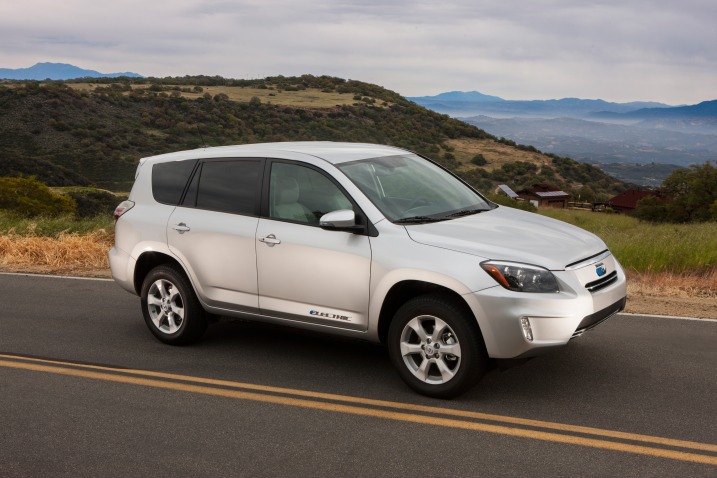
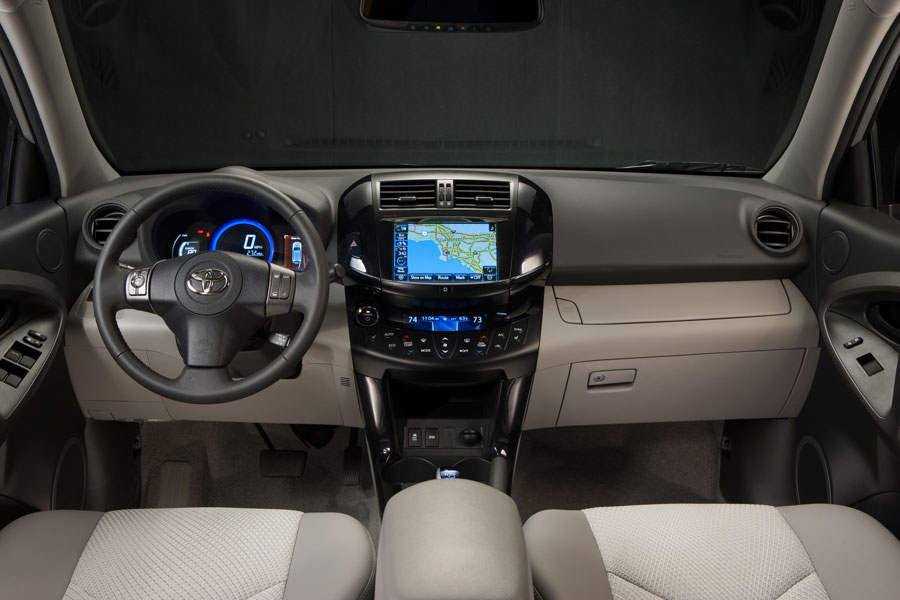
2013 Toyota RAV4 EV

2013 Toyota RAV4 EV

The second generation 2013 Toyota RAV4 EV was first unveiled at the Los Angeles Auto Show back in 2010. The 2013 Toyota RAV4 EV is currently the only all electric SUV on the market. The RAV4 is a result of a collaboration that started in May, 2010 between Tesla Motors and Toyota. One of the Goals Toyota had when building the RAV4 EV was not compromising on versatility, comfort or performance. The United States market launch will be late summer of 2012 at a starting price of $49,800. Sales will begin initially in California and production will be limited to 2,600 units during the first three years.

Performance

The 2013 Toyota RAV4 EV is powered by an all-electric drive train sourced from Tesla that produces a maximum output of 154 horsepower. This SUV can accelerate from zero to 60 mph in 7.0 seconds and has a top speed of 100 mph in sport mode. Normal mode takes 8.6 seconds to reach zero to 60 mph and has a top speed of 85 mph. The RAV4 EV has a range rating of around 100 miles and takes about six hours to fully charge on a 240V/40A charger.

2013 Toyota RAV4 EV

2013 Toyota RAV4 EV

2013 Toyota RAV4 EV

2013 Toyota RAV4 EV

2013 Toyota RAV4 EV

View the original article here

Monday, July 2, 2012

2013 Toyota Yaris Diesel

2013 Toyota Yaris Diesel


The Toyota Yaris has proved to be a affordable and economical entry level compact car. For those of us that want the ultimate in frugality, the 1.4L D-4D diesel engine is the best choice. However, here in North America the Toyota Yaris has not become available but with increased fuel prices maybe we will see one in the future. The North American Yaris is available as a three and five door hatch-back and starting at a MSRP of $14,115 for the three door and $16,100 for the five door model. Fuel efficiency of the Yaris is at 30 city and 38 highway. The diesel model was tested getting 70.49 mpg in the ALD Fleet world MPG marathon and was the overall winner. The Toyota Yaris is sold as the Vitz in Japan.

The Yaris has been a huge success for Toyota with global sales at 3.5 million in 70 countries. The new Yaris has made a lot of improvements over the out going model to make sure the Yaris stays on top of the competition. The Yaris has the same width as the out going model but is 100mm longer and height has been reduced by 20mm. The styling seems more aggressive that the previous Yaris and the sedan has been dropped in favor of a five door hatch back.

Performance

The diesel version of the Toyota Yaris is powered by a compact 1.4L inline four-cylinder turbocharged and intercooled diesel (1ND-TV) engine. This engine was designed around low emissions, low fuel consumption, reduction of mass and reduction of noise. This engine produces 90 horsepower at 3,800 rpm and 140 lb-ft between 1800-3000 rpm. This engine is used in the Toyota Auris, Corolla, iQ, Ractis, Verso-S, Urban Cruiser, Yaris and the Mini Cooper D. The Diesel Yaris can accelerate from 0 to 60 in 10.8 seconds when equipped with the six-speed manual transmission.

2013 Toyota Yaris Diesel

2013 Toyota Yaris Diesel

2013 Toyota Yaris Diesel

View the original article here

Toyota Corolla Diesel

Toyota Corolla Diesel


Diesel, for some car manufactures it’s simply a dirty word. Toyota is realizing that competitors are having no problem selling diesel powered automobiles in some markets such as India and Europe. Toyota has responded by putting a small diesel engine in the best selling car in the world, the Corolla. Could a diesel powered version of the best selling Corolla make it to the United States? The tenth generation of the Toyota Corolla (E140) is a world car that is produced in 19 cities all across the globe. This is the most refined Corolla yet and is offered with nine gasoline engine and one diesel engine. Reception has been mixed for this new model. Some media outlets have critisised the styling to similar to the previous model Corolla while others have praised the styling.

Toyota ND

The Toyota ND is a small inline four-cylinder turbocharged diesel that produces 90 horsepower at 3,800 rpm and 140 lb-ft of torque at 1,800 to 3,000 rpm. Combined fuel consumption is 58.8 mpg which would be great for the North American market. This engine is mated to a six-speed manual transmission. The only down side to this engine is some people have said it is slightly underpowered for the Corolla. Perhaps if Toyota prepared a diesel Corolla for the United States it would be fitted with a 2.0L unit rather than the 1.4L.

I’m interested in what people think about this subject. Do you think that a small affordable diesel version of the Toyota Corolla could be a success in the North American market? I think that the Toyota Corolla Diesel would do well here in the United States. With fuel prices continually rising, 58.8 combined mpg sure sounds good.

Toyota Corolla Diesel

Toyota Corolla Diesel

Toyota Corolla Diesel

Wednesday, June 6, 2012

Toyota Jumps On The Vehicle-To-Home Bandwagon


Toyota Motor Corporation (TMC) announced yesterday that it has developed a vehicle to home (V2H) system for the mutual sharing of power between electric-powered vehicles, such as plug-in hybrid vehicles (PHVs) and electric vehicles (EVs), and homes.

The V2H system will start testing, using Prius PHVs, at the end of 2012 in approximately 10 households as part of the Toyota City Low-Carbon Verification Project2 (Toyota City Project) that began in April 2010.

The newly developed V2H two-way electric power supply system can supply power from home to vehicle as well as from vehicle to home. An AC100 V inverter onboard the Prius PHV converts stored power into AC suitable for home use, while power flow is controlled according to communication between vehicle, charging stand and the home.

With this new method, low-carbon electricity (or "green" electricity) generated from regional or home solar generators, or low-cost late night electricity, can be stored in a vehicle's drive battery and then used to supply power to the household during peak consumption times. This kind of optimal energy flow can be automatically controlled by a home energy management system (HEMS).

Vehicle batteries can also be used as a power source in times of emergency by manually setting the electricity flow to supply power from the vehicle's drive battery through the charging stand to a home's lights and power outlets. According to Toyota, with a fully charged battery and full tank of gasoline, a Prius PHV can supply power for an average Japanese household (approximately 10 kwh) for four days.

Interest in smart grid technology and expectations for the effective use of electric vehicle batteries has increased due to recent anticipated electricity shortages in Japan, the beginning of full-scale renewable energy introduction and an increased need for emergency power supplies.

Households participating in the verification tests in Toyota City will use Prius PHVs, which can use the V2H system to supply electric power to homes, as well as function as conventional gasoline-electric hybrid vehicles once onboard electricity supply depletes to a certain level. TMC developed its V2H system while closely complying with existing charging and communications specifications defined by the International Organization for Standardization (ISO) and International Electrotechnical Commission (IEC), as well as with electrical safety standards and regulations.

Going forward, TMC hopes to promote the widespread use of V2H systems while closely studying—conscious of standardization trends—system, hardware, power generation and other relevant specification standards.

Wednesday, May 30, 2012

Prius Family Becomes Third Top-Selling Car Line in First Quarter 2012


With the launch of new variants, having paid its dues in gaining acceptance, and in light of generally high fuel prices this year, plus other positive sales pressures, Toyota’s Prius line became the third-ranked last quarter.

Last quarter global Prius line sales were 247,230 units, according to Bloomberg, compared to 300,800 Toyota Corollas and 277,000 recorded Ford Focus sales.

This latest feather in Toyota's cap comes as it recently traded places again with GM as the world’s largest automaker, and having three top-10 models, the Camry line being the third aside from the Corolla and Prius.

The Prius line now consists of the Liftback, Plug-In, Prius v and Prius c.

Japanese sales in post-tsunami Japan for the Aqua – as the Prius c is called there – have also helped a lot.

Prius family sales have tripled in that country from 175,080 in Q1 versus 52,507 last year.

Eric Noble, president of California-based automotive consultancy firm, the Car Lab, said to Bloomberg what HybridCars.com readers have long thought in assessing the Prius family success.

“It proves Prius wasn’t a fluke, that there’s a long-term market for hybrids,” he said.

Toyota’s Group Vice President of Global Sales, Bob Carter, said also the Prius line success makes it a de fact brand.

“Prius is a Prius first and a Toyota second,” Carter said. “The fact it’s doing well this year is a reflection of the strength of the model line and the Prius brand.”

Carter said he’s ordered additional production, noting especially high demand in Japan, and said he is confident he get more in the available supply for the U.S. also.

View the original article here 

Tuesday, May 29, 2012

Toyota Yaris Hybrid


Toyota has released its smallest hybrid yet, with a new petrol-electric version of the Yaris supermini. But how will this expensive technology stack up at the cheaper end of the car market?

Well, the starting price-tag of £14,995 isn’t as high as you might expect – it’s only £600 more expensive than the cheapest five-door diesel Yaris – and the rock-bottom running costs will be a real draw for many buyers.

In its most frugal form the Yaris Hybrid emits just 79g/km (though range-topping T Spirit models emit 85g/km), which is enough to make it the cleanest car in its class. That also comes with other benefits, such as car tax exemption and while fuel economy of 80.7mpg can’t match models like the 88mpg Kia Rio 1.1D, it should keep trips to the petrol station to a minimum. 


Those impressive figures are down to a petrol-electric set-up that has been developed from the system found in the Prius and Auris Hybrid models. While both those use a 1.8-litre engine, the Yaris uses a smaller 1.5-litre petrol and a more compact electric motor. Together they produce 98bhp and can accelerate the Yaris Hybrid from 0-62mph in 11.8 seconds.

Out on the road things aren't quite as good as they sound on paper. The hybrid set up works perfectly around town, providing enough low-end shove to get you to speed but it soon feels as though it has run out of steam. Getting up to motorway speeds is a struggle and once there, there's a consistent drone from the petrol engine and the CVT gearbox is constantly adjusting the revs, which does eventually grate.

The good news is that unlike the Toyota Prius, the Yaris Hybrid actually rides quite well. The occasional deep pothole will cause a loud thud to enter the cabin but otherwise the suspension deals well with very rough roads.


The handling is good, too, thanks to the quick and direct steering, but there's too much roll and too little feel in the steering for this to compete with the best in class, like the Ford Fiesta.

Unlike the Toyota Auris, the Yaris was designed with a hybrid model in mind so the packaging and practicality are much better. The batteries are now located underneath the rear seats, instead of compromising boot space. That means there's a full 286-litre load area available.

It's also the best-looking Yaris available, both inside and out. New LED daytime running lights and an aerodynamic front end have both done their part to smarten up the supermini. Inside, blue stitching and new dials have helped lift an otherwise drab interior.

The Yaris Hybrid's biggest problem though, will be its diesel competitors. The new Ford Fiesta 1.6 TDCi ECOnetic boasts similar emissions, a similar power output and far superior driving dynamics along with a price-tag that's just £500 higher for the same level of equipment.

But, the Yaris Hybrid does have an ace up its sleeve – all models in the range are automatic. Generally in this class an automatic gearbox costs an additional £1,000 or so, and speccing one has an adverse effect on emissions, too. In that sense, the Yaris Hybrid provides something unique and it's certain to draw some buyers in for that alone.

View the original article here

Saturday, May 26, 2012

Toyota Prepares 8 New Compact Model for Emerging Markets by 2015


The Japanese automaker, Toyota sees full growth of the North American, European and Japanese markets.

Thus Toyota is looking for other markets for its creation growth like some promising markets in Brazil, China or India. As stated by Toyota on Friday, by the next three years, the company is planning to introduce as many eight new compact size models for those developing markets.

In an interview with Reuters, Yukitoshi Funo who is the Toyota Executive Vice President said that currently there are four to five automakers that compete to grab the lead in sales volume in developing markets. He added that Volkswagen and other automakers are looking to challenge the company’s lead in especially in the Southeast Asian region.

The Japanese automaker stated that the new compact models will have a base price of nearly one million yen or around US$12,500 or €10,000 and may be higher than that. The models are particularly aimed for markets like India, Brazil and China.

Funo told the reporters that the company did not have a plan for lower cost model, commenting about some recent issues that said the development of a lower cost model cost about 500,000 yen or equal to US$6300 and €5,000 for India.

He said, the company wanted to make their presence in segments stronger and also wanted to be more competitive. The company would not go to the 500,000 yen segment because that was not their range. He continued that buyers could look for that price range, for example used cars.

Toyota has previously showed off three compact concept models at last month’s Auto China 2012 in Beijing that could give a hint to the upcoming vehicles aimed for some emerging markets.

Well, then it is clear that Toyota won’t build cars in such used cars’ pricing right? You can check the pictures of the three compact car concepts in the gallery below.

Sunday, May 13, 2012

The 2014 Toyota Tundra


When the second generation Tundra was introduced they did in a way that left some confused and others salivating.

The reason being is that I myself would never tow a trailer up a spiral metal ramp that breaths fire on my truck. It looked as though their advertising worked as the Tundra was a success for Toyota. Sure it didn’t have the following of Chevy or Ford but to still get nearly 200,000 Tundra’s on the road for the 2007 is pretty damn impressive.

Toyota wasn’t happy with the sales figures though especially after 2007 when they started to sputter off but $#!T dude, everything was getting hammered after 2007.

The Indian Tundra plant can produce 130,000 Tundra’s annually and so Toyota wants to hit over that every single year. For the 2014 Tundra it seems that we won’t see much in terms of change of exterior dimensions which means one thing – efficiency – a.k.a. Diesel!!! Yep there are doubters but we watched as Toyota planned a clean burning diesel version in 2008 but got scrapped. Well now it’s time to give Americans an oil burner. Why, because diesel is making more and more sense.

How great would a 30 mpg Tundra be that could pull your mother-in-law’s stupid above ground pool through her house with the slightest of ease. Plus you could run the truck off of French Fry oil or the grease drippings from your mother-in-law’s lazy-boy.

As for the Tundra main sellers (V8’s) we expect to see multi-port and direct injection making its way into the Tundra 2014 as well as VVT and valve lift. There is always the possibility for Toyota to start making sacrifices to save a drop such as an electric-power steering and stop-start feature although it is unclear at the moment.

How about an 8-speed? It seems that 8-speeds are becoming commonplace and Toyota/Lexus was the first to deliver an 8-speed to the masses with the LS so don’t rule that out. Word is also running amuck about a hybrid version and this looks to be a possibility.

There still seems to be some unclaimed battery packs coming from Toyota’s Tech buddies over at Tesla who are delivering the Toyota Rav4 EV packs. So we might see something being placed in the Tundra as Wantanabe has mentioned it before.

People also want to know if there will be a turbo-six cylinder to compete with the popular Ford Ego-boost. This is up in the air because we just don’t know all-though they already have the supercharger on hand. If it were I as the engineer then God help us, but otherwise I would stick the bulletproof 2JZ steel block in with a direct injected and valve lift cylinder head and place two twin scroll turbo chargers on it and crank it to 11 making a 2014 Toyota Tundra Turbo TRD.

We know that Toyota Tundra 2014 will step up its game and I am sure one thing we will see is a loss in weight. It seems the Tundra will go on a diet and possibly get a redesigned frame and suspension reconfiguration that lessens bed hop and rust. Plus we should see a massive change in interior design although I liked the current design.

Monday, April 23, 2012

We look at the 2013 Toyota RAV4 and RAV4 hybrid


Toyota is looking to have a big year for 2013 as they are continually redesigning some of the big sellers such as the Corolla, Avalon, and the Toyota RAV4. The Toyota RAV4 has filled a niche for small introductory SUV crossovers that could deliver fuel efficiency as well as the ability to get around and inclement weather. Though not as popular as a Toyota Highlander will see the new redesigned Toyota RAV4 being less bulbous and cutesy and a little sleeker and attractive to more male drivers. We will see that efficiency will be a top priority as Toyota works to implement direct injection and higher compression ratios in their engines. We will also see that 2013 Toyota RAV4 hybrid will be utilizing Tesla’s latest battery design as well as Toyota’s latest hybrid designs therefore producing what should be some very impressive numbers for a smaller crossover SUV.


2013 Toyota RAV4 Competitors


we look at competitors of the Toyota RAV4 2013 it seems apparent that the 2013 Ford Escape and Ford Escape hybrid are going to be Toyota’s biggest rival. With the redesigned 2013 Ford Escape you’re seeing Ford’s implement their Ecoboost engine designs as well as the latest hybrid technology making for a stiff competitor for the 2013 RAV4. Yet the other competitors for the 2013 RAV4 are very brisk as well. We will see many buyers being attracted to vehicles such as the 2013 Hyundai Santa Fe, 2013 Hyundai Tucson, 2013 Kia Sportage, 2013 Kia Sorento, 2013 Mazda CX5, and the 2013 Honda CRV.

2013 Toyota RAV4 Design Changes
 

As for the looks of the interior and exterior we see that Toyota will be borrowing styling cues from the Camry and Avalon. Though were not positive as to what the final product the US market is going to look like we do see from the spy photos there will share similar front fascia is other Toyotas. It does appear that the RAV4 will have 18 inch wheels standard for the higher end RAV4 Sport and RAV4 Limited. It also appears that the RAV4 sport will have more flat black accents such as on the front and rear fascia. It appears that the exterior rear spare carrier will get nixed for 2013 and will likely be placed outside and underneath the rear cargo area. The reason for this is more likely because of slow speed accident damage costs as well as rear visibility design issues.


2013 Toyota RAV4 EV

 
As for the fuel economy for the Toyota RAV4 2013 I expect no less than 30 miles per gallon for the base model engine and around 40 miles per gallon for the 2013 Toyota RAV4 hybrid. There has been some speculation about a 2013 Toyota RAV4 EV but it seems to be being produced as we speak in the Toyota Ontario Canada factory. This is also a vehicle the Toyota will be utilizing the Tesla batteries that appear to be very durable. We don’t know what the RAV4 EV MPGe rating is as of yet but I’m sure it will be similar to that of the Nissan Leaf. As we continue to uncover more information pertaining towards Toyota RAV4 2013 will be sure to post it up and keep you informed.